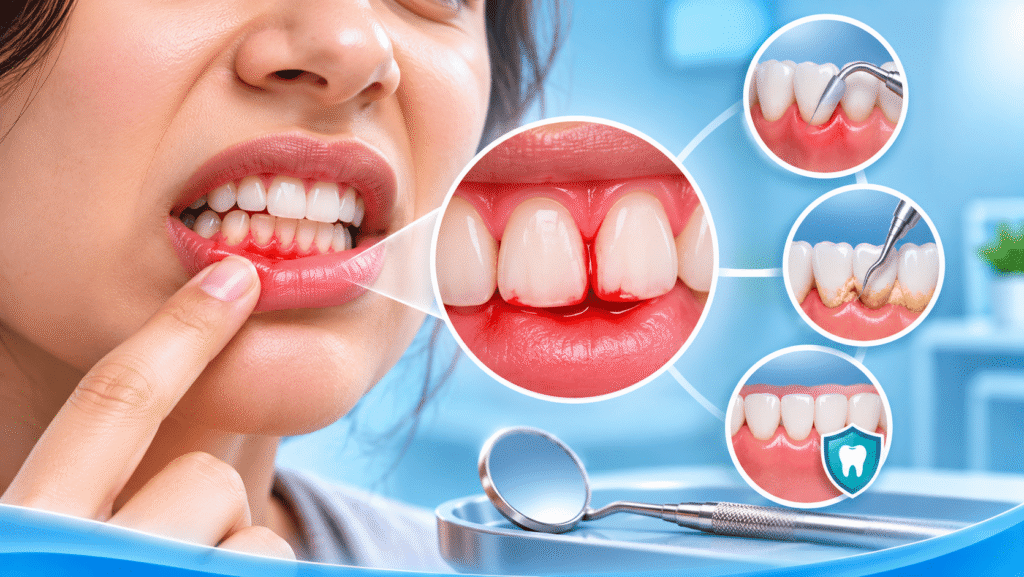
What causes bleeding gums?
Plaque and tartar build-up: the most common cause. Bacteria along the gum line irritate the gums.
• Brushing too hard or using a hard-bristled brush.
• Tobacco use, including smoking and chewing tobacco or gutka.
• Diabetes: poorly controlled blood sugar raises the risk and severity of gum disease.
• Hormonal changes during pregnancy.
• Certain medicines and vitamin deficiencies.
The stages of gum disease
Gingivitis
Red, swollen gums that bleed on brushing. There is no bone damage yet, and it is reversible with professional cleaning and better home care.
Periodontitis
The infection spreads below the gum line. Gums pull away from the teeth, forming pockets, and the supporting bone starts to break down. The damage cannot be fully reversed, but it can be stopped.
Advanced periodontitis
Significant bone loss leads to loose or shifting teeth, pain on chewing and eventual tooth loss if untreated.
Warning signs to watch for
Bleeding when brushing or flossing
• Persistent bad breath or a bad taste
• Red, swollen or tender gums
• Receding gums or teeth that look longer
• Loose teeth or a change in your bite
How is gum disease treated?
Scaling and polishing: professional cleaning to remove plaque and tartar. This is often all that gingivitis needs.
• Deep cleaning (scaling and root planing): cleaning below the gum line under local anaesthesia so the gums can reattach.
• Laser-assisted gum therapy: can be used to reduce bacteria and treat infected tissue with minimal discomfort.
• Gum surgery and grafting: for advanced cases, to reduce deep pockets or rebuild lost tissue and bone.
• Maintenance visits: regular reviews every three to six months to keep the condition under control.
Prevention: simple daily habits
Brush twice a day for two minutes with a soft-bristled brush.
• Clean between your teeth daily with floss or interdental brushes.
• Quit tobacco in all forms.
• Keep diabetes well controlled.
• Have a dental check-up and cleaning every six months.
Frequently asked questions
Does scaling weaken teeth or create gaps?
No. Scaling only removes deposits. Any gaps or sensitivity felt afterwards were hidden by tartar and usually settle as the gums heal.
Should I stop brushing if my gums bleed?
No. Keep brushing gently and see a dentist; stopping allows more plaque to build up and makes it worse.
Is gum disease linked to general health?
Research has associated gum disease with diabetes and heart disease, which is one more reason to treat it early.